How EPS Foam Is Made: Inside the Manufacturing Process
By Patrick Shafer
Expanded Polystyrene (EPS) foam is a lightweight, durable material used in everything from construction and insulation to protective packaging and molded products. Known for its strength and thermal efficiency, EPS has become a staple across multiple industries.
At Armstrong Brands, we specialize in manufacturing high-quality EPS foam products that meet strict performance standards. Understanding how EPS is made helps explain why it’s so effective, consistent, and versatile.
What Is EPS Foam?
EPS foam is a rigid, closed-cell material made from polystyrene resin. It consists of about 98% air and 2% plastic, giving it a unique balance of lightness and strength.
The manufacturing process transforms small, solid beads of polystyrene into large, lightweight foam blocks or custom-molded parts through heat, expansion, and fusion.
Step 1: Pre-Expansion
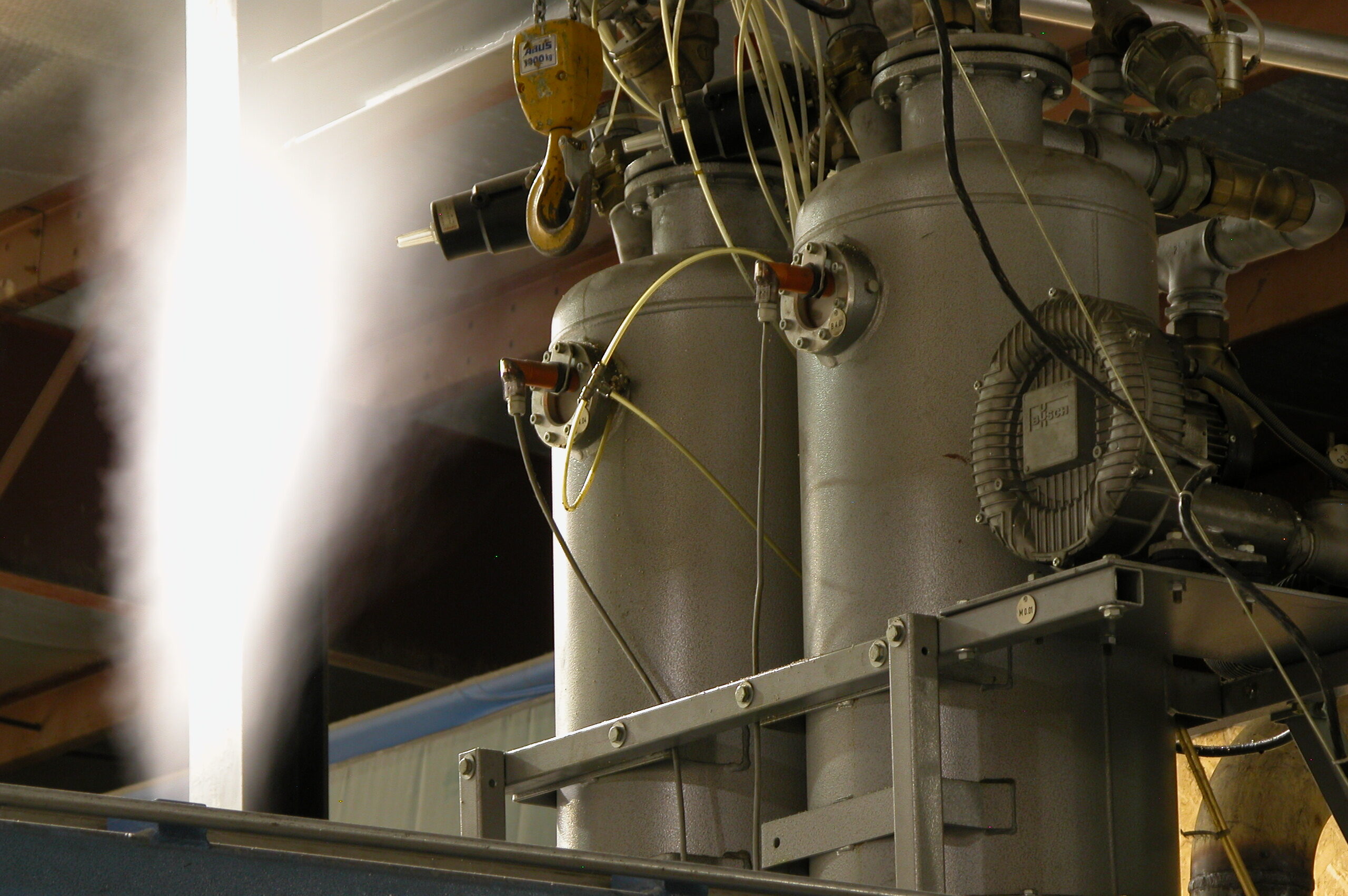
The process begins with raw polystyrene beads, which contain a small amount of pentane (a blowing agent). These beads are placed in a pre-expander, where steam heats them to around 200°F (93°C).
As the beads heat, the pentane vaporizes, causing each bead to expand up to 40 times its original volume. This step turns hard, glass-like pellets into lightweight foam beads filled mostly with air.
Why it matters:
Pre-expansion determines the initial density of the EPS foam. Lower-density foam provides better insulation and lighter weight, while higher-density foam offers more strength and durability.
Step 2: Conditioning
After pre-expansion, the foam beads are aged and conditioned in large, breathable storage containers. During this stage, the beads cool and stabilize as air replaces the pentane inside them.
This step is essential because it allows the internal pressure to equalize, which ensures consistent expansion during the molding stage.
In short: Conditioning gives the beads time to “breathe” and settle, helping produce uniform, high-quality EPS foam later on.
Step 3: Molding and Shaping
Once the beads are properly conditioned, they’re ready to be molded. Steam heat and pressure are applied again, causing the beads to soften and fuse together inside a mold.
There are two main molding processes used in the industry:
-
Block molding: Produces large foam blocks that can later be cut into sheets, panels, or custom shapes. This method is common for insulation boards and construction materials.
-
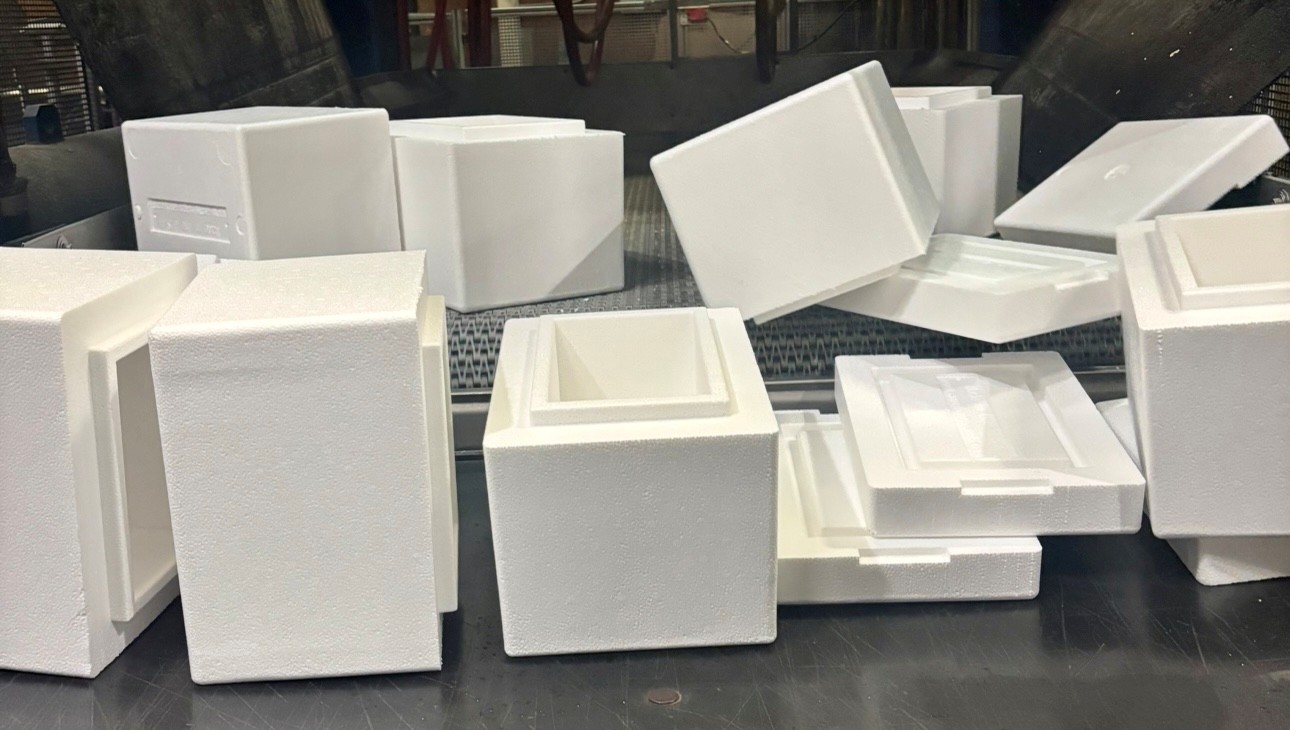
Shape molding: Produces custom parts directly in their final form, such as coolers, packaging inserts, or specialty components.
At Armstrong Brands, precision molds and careful temperature control ensure consistent density, strength, and surface finish in every product.
Step 4: Cutting and Fabrication
In block-molding operations, the large foam blocks are cooled and then cut into the desired sizes or profiles using specialized equipment such as:
-
Hot-wire cutters – for precise, smooth cuts.
-
CNC saws or contour cutters – for detailed shapes or angles.
-
Laminating machines – to combine layers or add protective facings.
This step customizes EPS to fit specific applications, whether it’s wall insulation, protective packaging, or industrial components.
Step 5: Quality Control and Finishing
Each batch of EPS foam undergoes quality control testing to verify density, strength, and dimensional stability. Testing ensures the foam meets all performance requirements before it leaves the facility.
At Armstrong Brands, every product is inspected for consistency and accuracy. Whether it’s a molded cooler or a construction-grade insulation panel, precision and performance are top priorities.
Step 6: Recycling and Sustainability
One of the biggest advantages of EPS foam is that it’s 100% recyclable. During manufacturing, any scrap or off-cuts are collected, ground down, and reintroduced into the process to create new foam products.
Additionally, many post-consumer EPS products can be recycled, supporting circular manufacturing and reducing environmental impact.
Because of this, EPS remains one of the most sustainable and energy-efficient materials in its class — especially when compared to other foams or plastics.
Why the EPS Manufacturing Process Matters
Each step of the EPS manufacturing process — from expansion to molding — directly affects the foam’s quality and performance. Careful control of temperature, pressure, and timing ensures uniform beads, consistent density, and reliable strength.
The result is a material that’s lightweight yet strong, insulating yet durable — ideal for applications ranging from energy-efficient building systems to protective packaging.
Final Thoughts
EPS foam manufacturing combines science, precision, and sustainability. By understanding how it’s made, you can better appreciate why it’s one of the most trusted materials in construction, packaging, and beyond.
At Armstrong Brands, we take pride in producing EPS products that meet the highest standards of performance and consistency — supporting our customers with materials that last, protect, and perform.