How Long Will It Stay Cold? Why the Answer Isn’t Simple
One of the most common questions in cold-chain e-commerce shipping is simple:
How long will this stay cold?
The honest answer is that it depends.
While insulation performance can be engineered and tested, predicting exact temperature retention time is complex. In modern e-commerce, where products move through warehouses, trucks, sorting facilities, and front door deliveries at high speed, many variables influence how long a package maintains safe internal temperatures.
Cold retention is not just about the box. It is about the entire system.
Starting Temperature Changes Everything
Was the product fully frozen, partially frozen, refrigerated, or at room temperature when packed?
A shipment that begins at negative 10 degrees behaves very differently than one packed at 36 degrees. The thermal mass of the product dramatically affects performance. Even small differences at pack-out can change how long temperatures are maintained.
Ambient Conditions Are Never Consistent
Testing is often performed at controlled temperatures such as 72 degrees or 90 degrees. Real-world shipping is rarely that predictable.
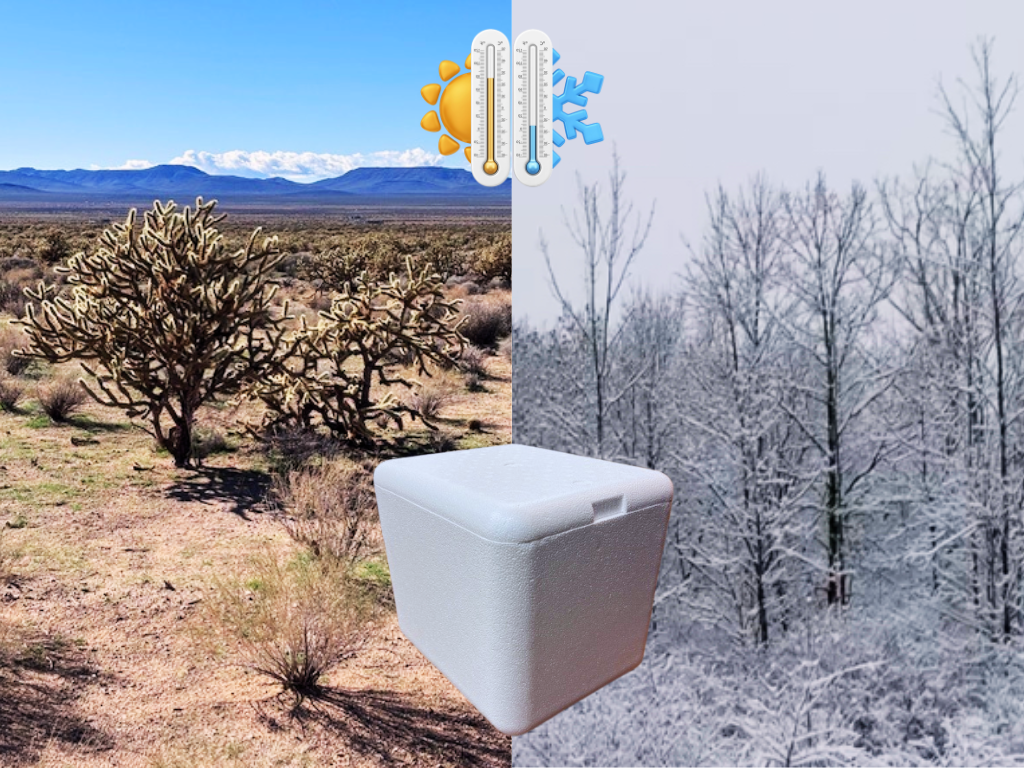
Performance is influenced by warehouse staging time, truck temperatures, regional climate differences, seasonal heat waves, and packages sitting on hot asphalt. A box traveling through Arizona in July will perform differently than one moving through the Midwest in winter.
Transit Time Is Not Always What It Seems
Two-day shipping does not mean 48 consistent hours in stable conditions.
Carrier delays, weekend holds, dock exposure, and missed delivery attempts can all extend time outside controlled environments. Each additional hour changes the thermal equation.
Refrigerant Type Makes a Major Difference
Not all cooling methods perform the same.
Dry ice provides extremely low temperatures but sublimates over time. Performance depends on load size and ventilation.
Gel packs provide stable and controlled cooling but require proper pre-freezing and have limited total cooling capacity.
Cubed or chipped ice melts more quickly, introduces moisture, and requires proper containment and drainage.
Each refrigerant has different energy capacity and melting behavior, which directly impacts retention time.
Pack-Out Configuration Is Critical
How the box is packed is just as important as insulation thickness.
Wall thickness, refrigerant placement, void space, product blocking, and lid seal integrity all influence performance. Even small air gaps can accelerate temperature loss. Intentional, tight pack-out design improves consistency and predictability.
Void Space and Airflow
Air inside a shipper can either help or hurt performance.
Large voids allow internal circulation that can speed up warming and create uneven temperatures. Reducing unnecessary air space improves stability and helps maintain consistent product temperature.
Insulation Is Only One Part of the System
Insulation slows heat transfer. It does not stop it.
The R-value of the walls is important, but total system performance depends on refrigerant mass, product mass, ambient temperature, exposure time, and pack-out configuration. Focusing only on wall thickness ignores the broader thermal system at work.
Testing Has Limits
Laboratory testing simulates controlled environments. It cannot fully replicate variable delivery routes, sudden weather swings, unexpected delays, or consumer handling conditions.
Cold retention numbers generated during testing reflect specific scenarios. They are not universal guarantees.
What This Means for E-Commerce Shipping
Instead of asking, “How long will it stay cold?” a better question is:
Under what conditions was it tested?
Reliable cold-chain design focuses on worst-case scenario planning, proper refrigerant selection, optimized pack-out, reduced void space, and realistic transit expectations.
When these variables are managed intentionally, temperature performance becomes far more predictable, even if it can never be reduced to a single fixed number.
Final Thought
Cold retention is not a promise. It is a system.
Temperature performance depends on starting conditions, transit variables, refrigerant type, and pack-out configuration. The most successful cold-chain solutions are built on engineering and real-world validation rather than simplified time guarantees.
Expanded polystyrene, or EPS, remains the industry benchmark for insulation performance. It consistently delivers superior thermal efficiency, structural reliability, and cost effectiveness compared to alternative materials. That is why it is trusted by leading pharmaceutical, medical, and food brands worldwide for temperature-sensitive shipments.
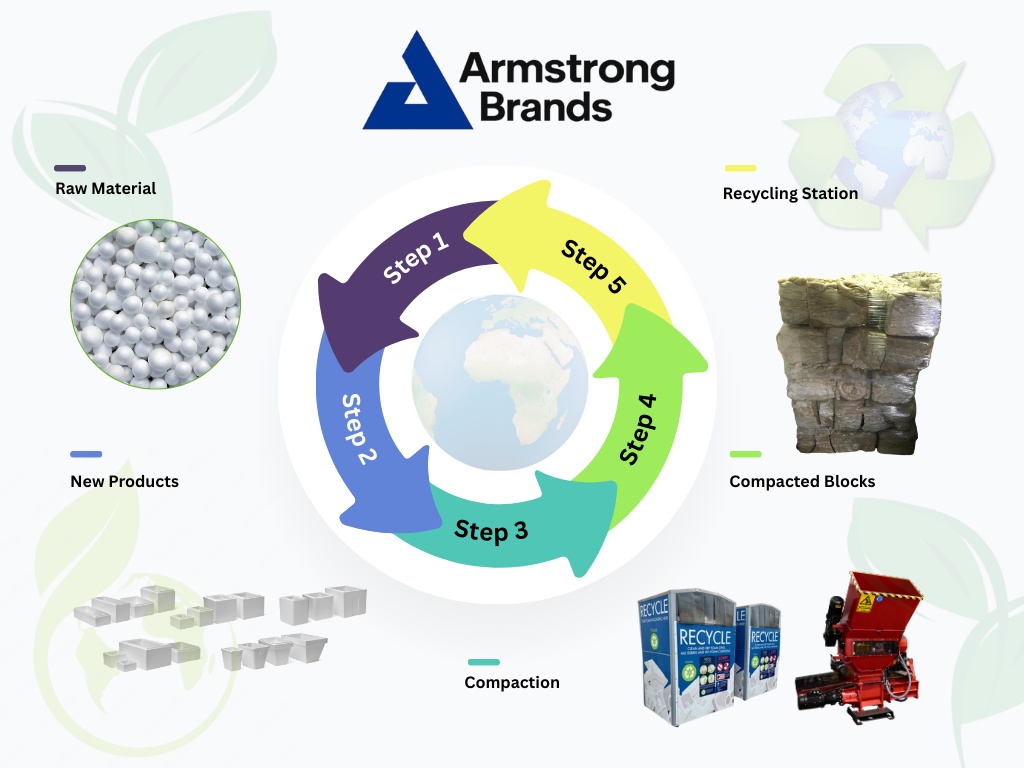
When supported by responsible collection and recycling programs, EPS is also 100 percent recyclable. It remains one of the best-performing and most practical insulation materials available for modern e-commerce cold-chain logistics.
About the Author: Patrick Shafer