Rethinking EPS in an Ever-Evolving E-Commerce Environment
Debunking Common Myths About EPS in Modern Packaging
Expanded Polystyrene (EPS) has been a trusted packaging material for decades, yet it remains one of the most misunderstood. In today’s fast-moving e-commerce environment—where products ship farther, faster, and more frequently many companies are re-evaluating packaging decisions based on perception rather than performance.
Unfortunately, persistent myths about EPS continue to influence purchasing decisions, often steering companies away from a material that delivers proven protection, efficiency, and sustainability when used responsibly. Below, we address the most common misconceptions that are still holding companies back.
Myth #1: EPS Isn’t Recyclable
Reality: EPS is recyclable—and has been for decades.
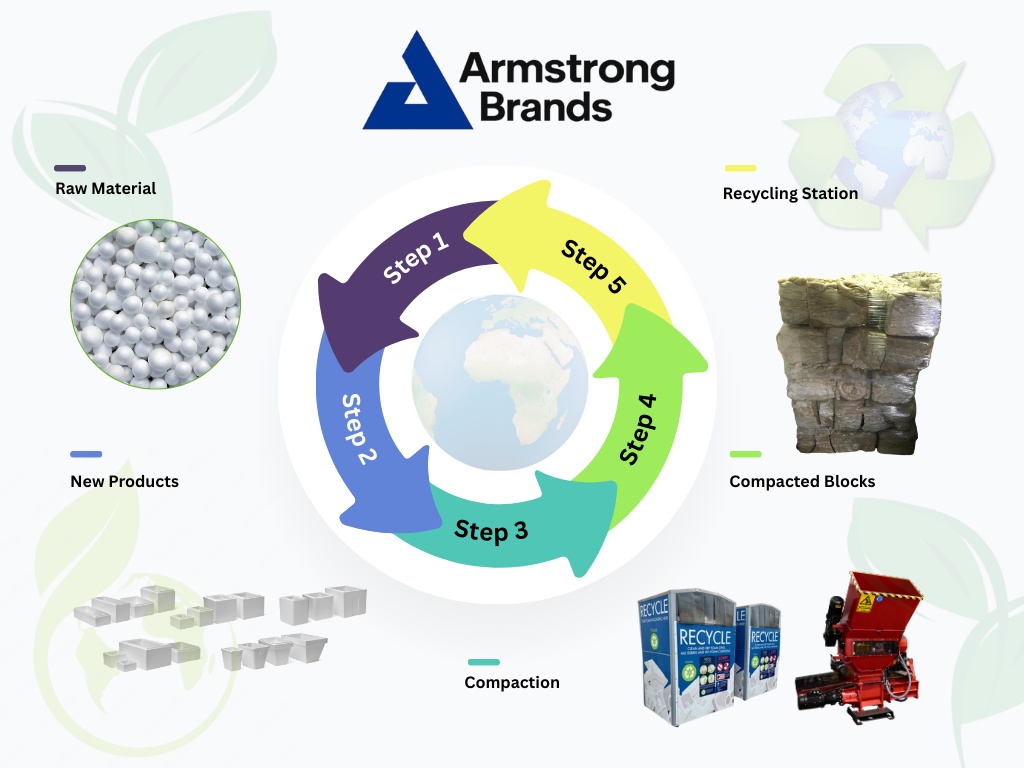
EPS can be compacted, densified, and reprocessed into new products. The real challenge has never been recyclability itself, but collection and access. When local or regional recycling programs are in place, EPS recycling is efficient, effective, and scalable.
Myth #2: EPS Is Bad for the Environment
Reality: EPS often has a lower total environmental impact than heavier alternatives.
Because EPS is over 95% air, it requires less raw material and significantly reduces transportation emissions. Its ability to protect products also minimizes damage, spoilage, and returns—critical factors in high-volume e-commerce shipping.
Myth #3: Molded Pulp Is Always the Greener Choice
Reality: Molded pulp is not automatically more sustainable.
Molded pulp products are heavier, require substantial water and energy to manufacture, and often provide less consistent protection. In many e-commerce and cold-chain applications, this results in higher damage rates and increased waste—undermining sustainability goals.
Myth #4: EPS Is Outdated Technology
Reality: EPS has evolved significantly.
Modern EPS packaging incorporates:
-
Precision mold design
-
Optimized densities for strength and insulation
-
Recycled-content and biodegradable bead options
-
Custom engineering for exact product fit
EPS is not a legacy material, it is a continuously improving packaging solution.
Myth #5: EPS Can’t Be Part of a Sustainable Packaging Strategy
Reality: EPS integrates well into responsible, circular packaging programs.
EPS is commonly used in:
-
Closed-loop recycling systems
-
Take-back and densification programs
-
Local recycling partnerships
-
Right-sized packaging designs that reduce material usage
Sustainability is about responsible use, not blanket elimination.
Myth #6: EPS Is Only for Cheap or Disposable Packaging
Reality: EPS protects high-value, mission-critical products every day.
EPS is widely used in pharmaceutical shipping, medical devices, electronics, industrial equipment, and temperature-sensitive food shipments. Its performance and reliability make it a smart choice for protecting valuable goods in transit.
Myth #7: EPS Takes Up Too Much Space in Landfills
Reality: EPS compacts extremely well.
When densified, EPS can be reduced by up to 98% in volume, making recycling and transportation efficient. Its lightweight nature often creates a misleading visual impression prior to compaction.
Myth #8: All EPS Is the Same
Reality: EPS performance depends on design, density, and manufacturing quality.
Factors such as mold precision, wall thickness, density selection, and product fit dramatically affect performance. Well-designed EPS packaging consistently outperforms generic foam solutions.
Myth #9: EPS Is Being Phased Out Everywhere
Reality: EPS remains widely accepted for protective packaging.
Most regulations target foodservice items—not protective, medical, or industrial packaging. EPS continues to be a standard material across e-commerce, cold chain, and industrial markets.
Myth #10: Eliminating EPS Is Always Progress
Reality: Replacing EPS without evaluating performance can increase damage, returns, and emissions.
True progress comes from reducing product loss, optimizing logistics, and selecting materials based on real-world performance—not perception alone.
Final Thought
Sustainable packaging isn’t about banning materials—it’s about using the right ones responsibly.
In an ever-evolving e-commerce world, EPS—when properly designed, engineered, and recycled helps reduce damage, returns, and waste, making it part of the solution, not the problem.