Custom Molded vs. Fabricated EPS Packaging: Which Is Right for Your Project?
By Patrick Shafer
When a company needs protective EPS packaging, custom molding may seem like the obvious solution. However, it is not always the best place to start.
Depending on production volume, product design, lead time, and budget, fabricated EPS packaging may provide a faster and more economical option. For established, higher-volume programs, custom molded packaging can deliver greater consistency and a lower long-term cost per part.
Understanding the differences can help companies protect their products effectively without taking on unnecessary tooling costs.
What Is Fabricated EPS Packaging?
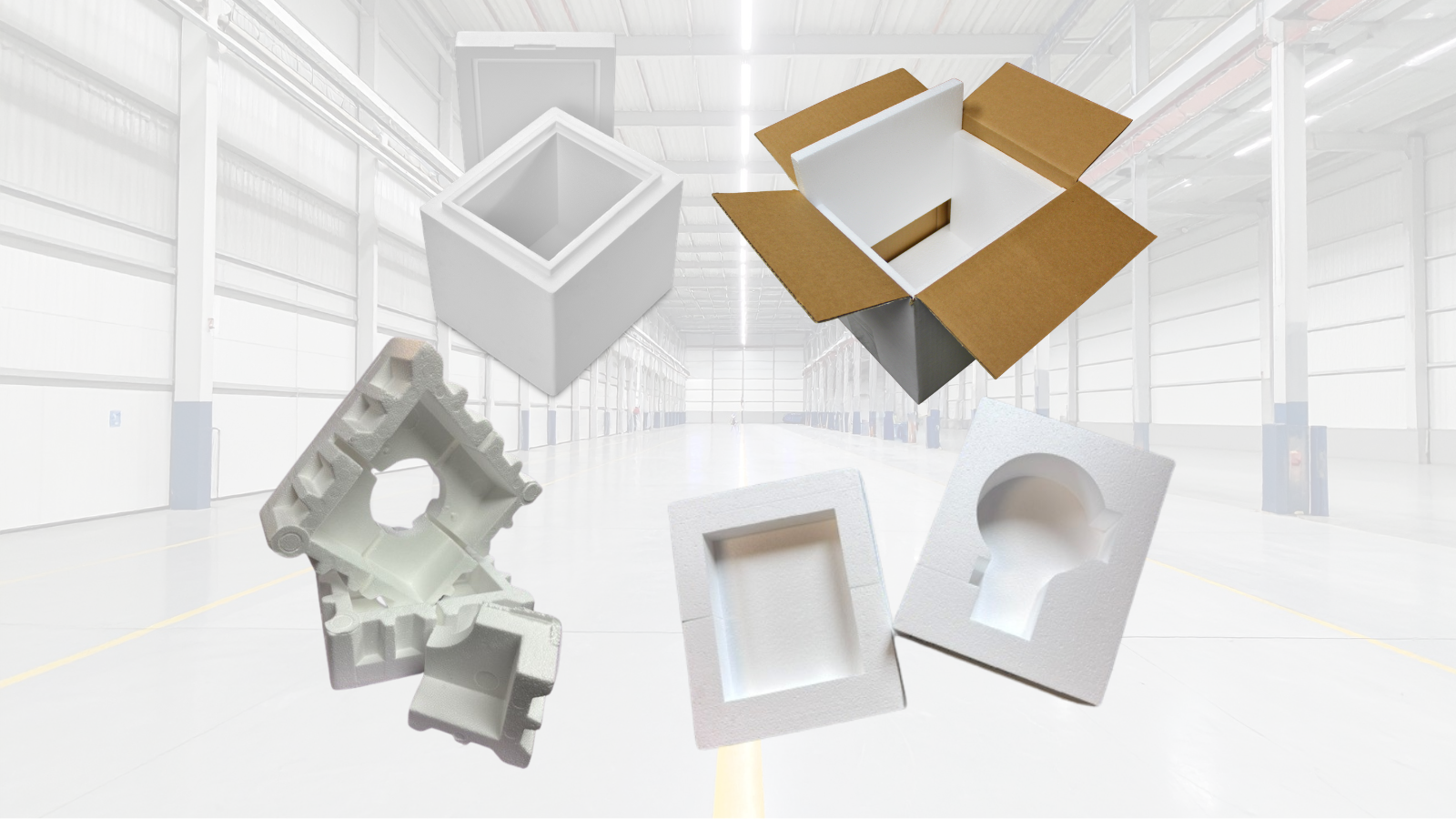
Fabricated EPS packaging is produced by cutting foam blocks or sheets into the required shapes and dimensions. Individual components can be cut, shaped, and assembled to create protective end caps, corner pads, trays, inserts, and other packaging configurations.
Because fabrication does not require a dedicated production mold, it offers several advantages:
- Little or no tooling investment
- Shorter startup times
- Easier design changes
- Cost-effective production for lower volumes
- Greater flexibility for prototypes and new products
Fabricated packaging can be designed around the exact dimensions of a product while still providing the cushioning, insulation, and lightweight protection associated with EPS.
The primary tradeoff is that fabrication often requires more cutting, handling, and assembly. As production volume increases, those additional steps can result in a higher cost per part than a molded solution.
What Is Custom Molded EPS Packaging?
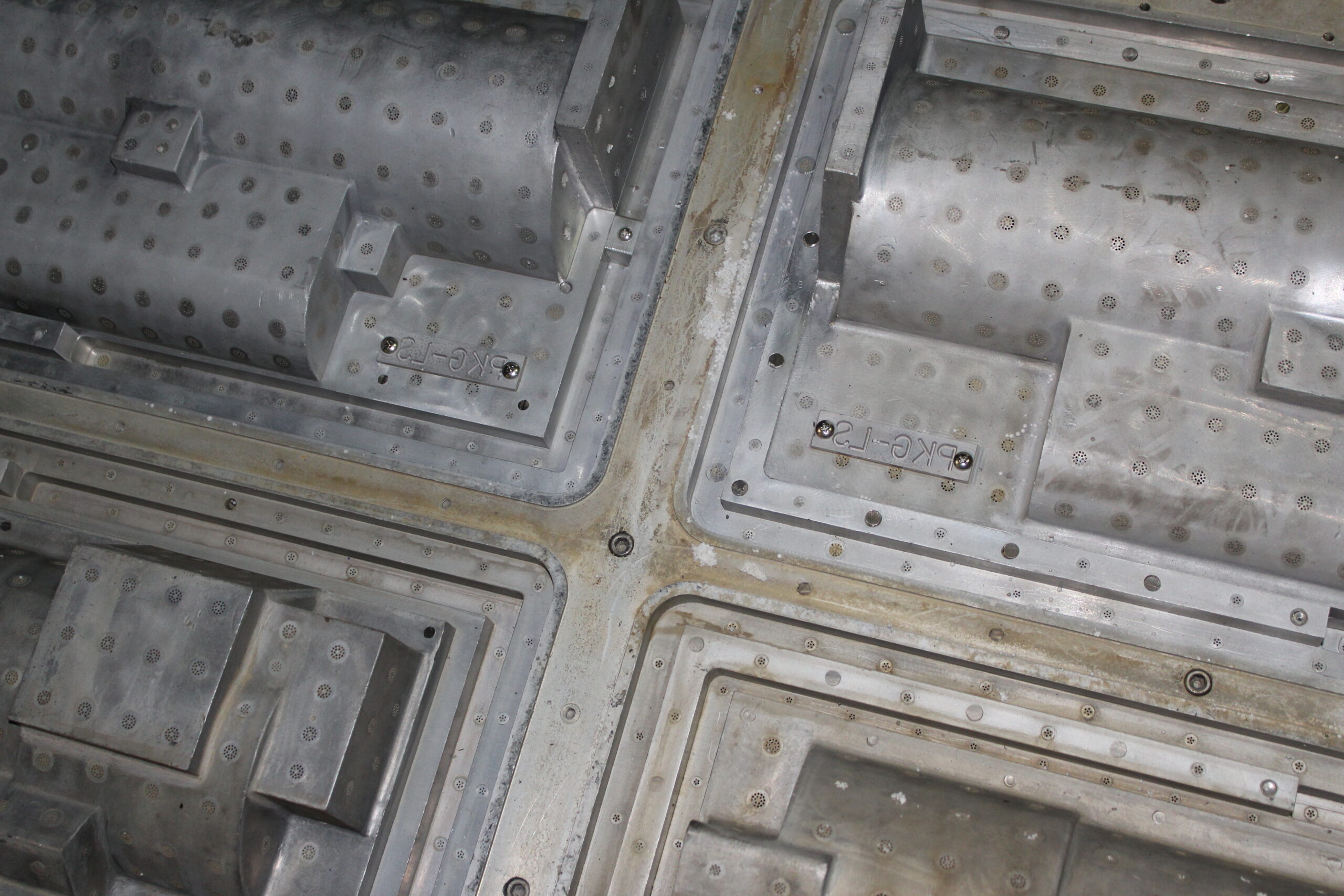
Custom molded EPS packaging is produced inside a precision-built aluminum mold. Pre-expanded EPS beads are placed into the mold and fused together with steam, creating a finished part in its final shape.
Molded EPS can incorporate features such as:
- Contoured product supports
- Recesses and cavities
- Ribs and reinforced areas
- Variable wall thicknesses
- Integrated lids or mating components
- Multiple parts produced during each molding cycle
The mold requires an upfront investment, but once the tooling is complete, parts can be manufactured repeatedly with a high level of consistency.
For established programs with sufficient production volume, molding can reduce the cost per part and provide a cleaner, more finished packaging design.
Comparing Fabricated and Molded EPS
| Consideration | Fabricated EPS | Custom Molded EPS |
|---|---|---|
| Upfront tooling cost | Low or none | Higher initial investment |
| Startup time | Generally shorter | Mold design and construction required |
| Design changes | Relatively easy | Changes may require mold modifications |
| Production volume | Best suited for low to moderate volumes | Often best for repeat, higher-volume programs |
| Part consistency | Dependent on cutting and assembly | Highly repeatable |
| Design complexity | Best for cut and assembled shapes | Can incorporate detailed molded features |
| Cost per part | May be higher as volume increases | Can become more economical at higher volumes |
| Appearance | Functional and application-dependent | Typically more finished and uniform |
Neither method is automatically better. The right choice depends on the specific needs of the packaging program.
When Fabricated EPS Makes More Sense
Fabricated packaging is often the better choice when a project is new, production requirements are uncertain, or the expected volume does not justify a custom mold.
It may be the right solution when:
- Annual order volume is relatively low
- The product design may change
- Packaging is needed quickly
- The program is still in the testing or prototype stage
- Several similar products require slightly different packaging
- The part is too large or impractical for conventional shape molding
- The available budget does not support tooling
Fabrication also gives companies an opportunity to evaluate a packaging design before committing to a permanent mold.
If a product is still being refined, starting with fabricated packaging can reduce risk. Dimensions, cushioning areas, and product fit can be adjusted without making expensive changes to production tooling.
When Custom Molding Makes More Sense
Custom molding becomes more attractive when a product design is stable and the packaging will be produced repeatedly over an extended period.
It may be the better option when:
- Production volumes are consistent and repeatable
- A precise product fit is required
- Part-to-part consistency is important
- The packaging includes complex contours or integrated features
- Assembly time needs to be reduced
- A cleaner, finished appearance is desired
- Lower long-term piece pricing can offset the tooling investment
A properly designed mold can produce thousands of consistent parts while reducing the cutting, bonding, and assembly operations associated with fabrication.
The tooling should be viewed as part of the overall packaging program rather than simply as an upfront expense. When the tooling cost is distributed across a sufficient number of parts, its effect on the total cost per unit becomes much smaller.
For a closer look at the tooling process, read What Goes Into Designing a Custom EPS Mold—and Why It Matters.
Is There a Minimum Volume for Custom Molding?
There is no single production volume at which custom molding automatically becomes the better choice.
The financial break-even point depends on several factors:
- Mold cost
- Number of cavities
- Part size and complexity
- Fabricated cost per unit
- Molded cost per unit
- Annual production volume
- Expected life of the program
- Labor and assembly requirements
For example, a simple fabricated part may remain cost-effective at moderate volumes. A more complex design requiring several cut and assembled components could justify molded tooling much sooner.
The best approach is to compare the total cost of each option over the expected life of the program, not just the initial tooling price or first production order.
Can a Project Start Fabricated and Later Move to Molded?
Yes. In many cases, this is the most practical approach.
A company can begin with fabricated packaging while:
- Testing the product fit
- Completing shipping trials
- Confirming product dimensions
- Building customer demand
- Finalizing annual volume
- Evaluating real-world packaging performance
Once the design and production requirements are stable, the fabricated packaging can serve as the starting point for a custom molded design.
The two versions may not be identical because molded EPS has different design and manufacturing requirements. However, the experience gained from the fabricated package can help identify support points, clearance requirements, and potential design improvements before mold construction begins.
This approach reduces the risk of investing in tooling too early.
The Importance of Designing for the Entire Packaging System
Choosing between fabricated and molded EPS should not be based on the foam component alone.
The complete packaging system may also include:
- Corrugated boxes
- Pallets
- Product bags or liners
- Refrigerants or gel packs
- Tape and closure methods
- Shipping and handling requirements
A change to the EPS design can affect carton dimensions, pallet quantities, freight utilization, and overall shipping costs.
In some cases, a slightly more expensive foam component may reduce damage or allow more products to fit on a pallet. In others, a molded design may eliminate separate components and reduce packing labor.
The lowest foam price does not always produce the lowest total packaging cost.
Finding the Right Solution
Fabricated EPS provides flexibility, shorter startup times, and lower initial investment. Custom molded EPS offers repeatability, design integration, and the potential for a lower cost per part at higher production volumes.
The best solution depends on where the product is in its life cycle and what the packaging program needs to accomplish.
At Armstrong Brands, we manufacture both custom molded and fabricated EPS products. This allows us to evaluate a project based on the customer’s actual requirements rather than forcing it into a single manufacturing method.
Our goal is to help customers find a packaging solution that provides the necessary protection while balancing tooling, production volume, lead time, and long-term cost.
Ready to Discuss Your Packaging Project?
If you are deciding between fabricated and custom molded EPS packaging, Armstrong Brands can review your product dimensions, anticipated volume, shipping environment, and performance requirements.
Contact us to discuss which manufacturing approach makes the most sense for your project.